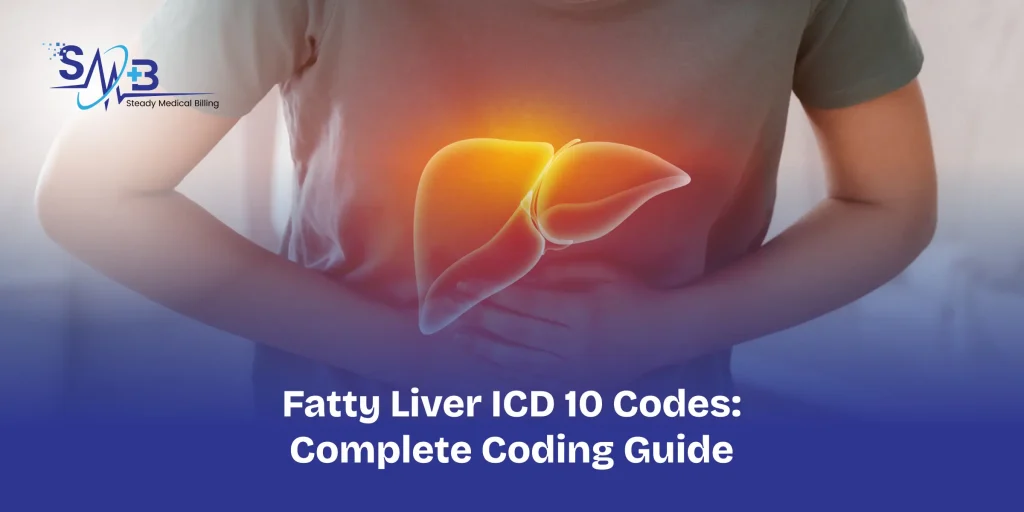
Do you struggle with fatty liver coding daily? Are you confused about proper ICD 10 codes? Fatty liver affects over 100 million Americans nationally. Studies show 25% of adults worldwide have fatty liver disease. About 40% of obese adults develop nonalcoholic fatty liver condition. The right diagnosis code ensures proper insurance reimbursement always. Wrong codes lead to claim denials and payment delays.
Fatty liver ICD 10 coding requires specific diagnosis codes for accuracy. The main code is K76.0 for fatty liver condition. Alcoholic and nonalcoholic types need different codes completely. Sub-codes specify disease severity and complications shown clearly. Insurance companies require accurate coding for claim approval processes. Using the wrong codes costs medical practices thousands annually in losses.
This guide explains fatty liver ICD 10 coding completely today. We show the right codes to use correctly. You will learn when to apply each one. Tables make finding codes quick and easy.
Understanding Fatty Liver ICD 10 Codes
Fatty liver has specific ICD 10 codes today. Multiple codes describe different disease types well. Choose codes based on the patient’s condition shown.
Primary Fatty Liver Codes
| ICD 10 Code | Description | Common Usage |
| K76.0 | Fatty (change of) liver, not elsewhere classified | Simple fatty liver, no inflammation |
| K75.81 | Nonalcoholic steatohepatitis (NASH) | Fatty liver with inflammation |
| K70.0 | Alcoholic fatty liver disease | Alcohol-related fatty liver |
| K70.1 | Alcoholic hepatitis | Alcohol-induced liver inflammation |
| K76.9 | Liver disease, unspecified | When a specific type is unknown |
NAFLD Staging Codes
| ICD 10 Code | Description | Disease Stage |
| K76.0 | Simple steatosis | Stage 1 – Fat accumulation only |
| K75.81 | NASH | Stage 2 – Fat with inflammation |
| K74.0 | Hepatic fibrosis | Stage 3 – Scarring present |
| K74.60 | Unspecified cirrhosis | Stage 4 – Advanced scarring |
Code Selection Guidelines
Match codes to the documented patient disease severity shown. Document the alcohol use history in all liver cases. Use specific codes for complications when present clearly. Include lab values supporting diagnosis in documentation. Link fatty liver to underlying conditions like diabetes.
Fatty Liver Diagnosis Documentation
Proper docs support fatty liver diagnosis codes always. Insurance companies review liver disease claims carefully today.
Required Documentation Elements
| Documentation Type | Required Information | Example |
| Diagnostic Tests | Imaging or biopsy results | “Ultrasound shows hepatic steatosis.” |
| Lab Values | Liver enzymes and function | “AST 45, ALT 60, elevated.” |
| Alcohol History | Drinks per week documented | “Patient reports 2 drinks weekly.” |
| BMI and Weight | Current measurements | “BMI 32, weight 210 lbs” |
| Associated Conditions | Diabetes and obesity were noted | “Type 2 diabetes, hypertension present” |
Medical Necessity Documentation
Every fatty liver diagnosis needs a medical necessity justification. Document patient symptoms like fatigue or abdominal discomfort. Include physical exam findings such as hepatomegaly. Previous test results should guide the diagnostic decisions made.
Coding Documentation Best Practices
- Use specific diagnostic test results, as ultrasound findings reported
- Avoid vague terms like abnormal liver or liver problem noted
- Quantify alcohol use with exact drinks per day, weekly
Alcoholic vs Nonalcoholic Fatty Liver
Distinguishing between types is critical for coding. Each type has different ICD 10 codes.
Alcoholic Fatty Liver Codes
| Condition | Primary Code | Key Documentation |
| Alcoholic fatty liver | K70.0 | Alcohol use history required |
| Alcoholic hepatitis | K70.1 | Inflammation with alcohol use |
| Alcoholic fibrosis | K70.2 | Scarring from alcohol |
| Alcoholic cirrhosis | K70.30 | End-stage alcoholic liver disease |
Nonalcoholic Fatty Liver Codes
| Condition | Primary Code | Associated Conditions |
| Simple NAFLD | K76.0 | Obesity, diabetes, metabolic syndrome |
| NASH | K75.81 | Same as NAFLD plus inflammation |
| NAFLD with fibrosis | K74.0 | Advanced disease stage |
Distinguishing Documentation
Document alcohol screening questionnaire results like AUDIT scores. Include the patient’s self-reported alcohol consumption patterns clearly. Note if liver disease is present despite minimal drinking. Code both conditions if the patient has a mixed etiology.
Related Conditions and Complications
Fatty liver often occurs with other conditions. Each related condition needs additional diagnosis codes.
Metabolic Syndrome Components
| Condition | ICD 10 Code | Relationship to Fatty Liver |
| Type 2 diabetes | E11.9 | Present in 70% of NAFLD cases |
| Obesity | E66.9 | Major risk factor for NAFLD |
| Hypertension | I10 | Component of metabolic syndrome |
| Hyperlipidemia | E78.5 | High triglycerides common |
Liver Complications
| Complication | ICD 10 Code | When to Use |
| Hepatic fibrosis | K74.0 | Scarring confirmed by biopsy |
| Cirrhosis | K74.60 | Advanced scarring present |
| Portal hypertension | K76.6 | Increased liver pressure |
| Hepatocellular carcinoma | C22.0 | Liver cancer developed |
Coding for Different Specialties
Different medical specialties code fatty liver differently today. Each specialty has unique documentation standards required clearly defined.
Primary Care Coding
| Scenario | Primary Code | Supporting Codes |
| Elevated liver enzymes | K76.0 | E11.9 (Diabetes), E66.9 (Obesity) |
| Screening ultrasound | K76.0 | Z13.89 (Screening) |
| Follow-up visit | K76.0 | Z09 (Follow-up) |
Gastroenterology/Hepatology Coding
Specialists use more specific staging and severity codes. Include FibroScan or biopsy results when available. Code complications like portal hypertension are shown separately. Document specialist consultation findings and recommendations made.
Endocrinology Coding
Endocrinologists treat metabolic causes of fatty liver. Code diabetes as primary with fatty liver secondary. Include HbA1c values in documentation for diabetes control. Document the metabolic syndrome treatment plan comprehensively outlined.
Insurance and Reimbursement
Insurance coverage for fatty liver varies by plan. Proper coding maximizes reimbursement rates received.
Coverage Considerations
Most insurance covers fatty liver diagnosis under codes. Prior authorization may be required for imaging studies. Medical necessity documentation is critical for claim approval. Some plans require specific BMI thresholds for coverage.
Maximizing Reimbursement
Use the most specific code based on disease severity. Link fatty liver to the underlying metabolic conditions present. Document all diagnostic testing performed to confirm diagnosis. Include a treatment plan for weight loss and monitoring.
Denial Management
Denied claims can be appealed with additional documentation. Submit imaging reports and lab results supporting the diagnosis. Include treatment notes showing medical necessity clearly. Most appeals succeed with proper documentation provided quickly.
Conclusion
Fatty liver ICD 10 coding requires specific diagnosis codes. K76.0 is for simple fatty liver without inflammation. K75.81 applies to NASH with inflammation present clearly. Document alcohol use to distinguish an alcoholic from a nonalcoholic. Code all associated metabolic conditions separately for completeness. Proper documentation supports medical necessity for claims submitted.
FAQs
What is the main ICD-10 code for fatty liver?
K76.0 is the primary code for simple fatty liver. This code applies to nonalcoholic fatty liver disease. Use K75.81 when inflammation is present with NASH.
How do you code alcoholic fatty liver?
Use K70.0 for alcoholic fatty liver disease specifically. Document the patient’s alcohol consumption in medical records clearly. Include drinks per day and duration of use.
What is the difference between K76.0 and K75.81?
K76.0 is simple fat accumulation without inflammation present. K75.81 is NASH with liver inflammation and damage. Biopsy or advanced imaging confirms the NASH diagnosis, usually.
Do you code obesity with fatty liver?
Yes, code obesity separately with E66.9 when present. Most fatty liver patients are obese or overweight. Document BMI in medical records for severity.
Can you use multiple liver codes together?
Yes, code complications separately from the primary diagnosis. Use K76.0 plus K74.0 for fibrosis together. Code cirrhosis in addition to fatty liver present.