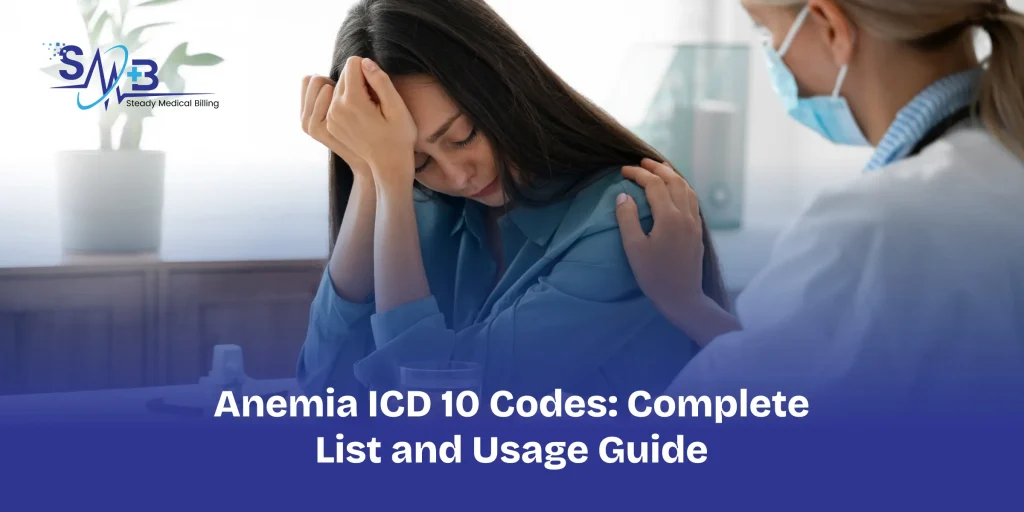
Do you code anemia cases every day in practice? Are you unsure which ICD 10 code for anemia to use? Anemia affects approximately 1.62 billion people worldwide, according to WHO data. Studies show that iron deficiency anemia accounts for 50% of all anemia cases. Proper anemia ICD 10 coding ensures accurate reimbursement for treatment provided. Wrong codes lead to claim denials and delayed payments.
The ICD 10 code for anemia varies by type and cause. D64.9 is the code for unspecified anemia commonly used. Specific codes exist for iron deficiency, vitamin deficiency, and hemolytic types. Medicare reviews anemia claims closely for proper coding accuracy always. Documentation must support the specific code used for each patient case. Using the right code prevents audits and claim rejections completely.
This guide covers all anemia ICD 10 codes clearly and simply. We show when to use each code properly for billing. You will learn documentation requirements for anemia coding practices. Tables make finding the right code easy and fast. Proper coding improves practice revenue and reduces claim denials significantly. Medical coders need this information for accurate billing daily.
Common Anemia ICD 10 Codes
Anemia has multiple ICD 10 codes available for use. Each code describes a different type or cause. Choose the right code based on lab results.
Primary Anemia Codes Table
| ICD 10 Code | Description | Common Usage |
| D64.9 | Anemia, unspecified | No specific type documented |
| D50.9 | Iron deficiency anemia, unspecified | Low iron levels confirmed |
| D51.9 | Vitamin B12 deficiency anemia | Low B12 documented |
| D52.9 | Folate deficiency anemia | Low folate levels |
| D53.9 | Nutritional anemia, unspecified | Diet-related causes |
| D59.9 | Hemolytic anemia, unspecified | Red cell destruction |
Iron Deficiency Anemia Codes
| Code | Description | Key Features |
| D50.0 | Iron deficiency anemia secondary to blood loss | Chronic bleeding present |
| D50.1 | Sideropenic dysphagia | Plummer-Vinson syndrome |
| D50.8 | Other iron deficiency anemias | Specified iron deficiency |
| D50.9 | Iron deficiency anemia, unspecified | Most common iron deficiency code |
Vitamin Deficiency Anemia Codes
B12 deficiency uses D51 series codes specifically. Folate deficiency uses D52 series codes instead. D51.0 is for vitamin B12 deficiency due to intrinsic factor. D51.9 is used for unspecified B12 deficiency anemia. D52.0 applies to dietary folate deficiency anemia. Lab results must confirm low vitamin levels.
When to Use D64.9 Code
D64.9 is the unspecified anemia code used often. Use this when the type is not yet determined. This code applies to a general anemia diagnosis.
D64.9 Usage Guidelines
| Scenario | Use D64.9? | Reason |
| Hemoglobin low, cause unknown | Yes | Type not yet determined |
| Initial visit before workup | Yes | Diagnosis not yet confirmed |
| Patient reports “anemia” only | Yes | Insufficient detail for specific code |
| Lab shows anemia, no further testing | Yes | Cannot specify type without tests |
Documentation Requirements for D64.9
Document complete blood count results showing low hemoglobin. Include hematocrit values in the patient’s medical record clearly. Note the mean corpuscular volume for cell size information. Record the red blood cell count in the lab section. List any symptoms like fatigue or weakness reported.
Common D64.9 Coding Mistakes
Using D64.9 when a specific type is already documented clearly. Applying unspecified code after the iron studies are completed fully. Not updating code after additional test results obtained. Failing to document hemoglobin and hematocrit values completely.
Specific Anemia Type Codes
Specific codes provide more detail than D64.9 always. Use these when the type or cause is known.
D50 Series – Iron Deficiency
D50.0 applies to blood loss anemia specifically documented. Common in gastrointestinal bleeding or heavy menstrual periods. D50.1 is for sideropenic dysphagia cases only. D50.8 covers other specified iron deficiency causes. D50.9 is an unspecified iron deficiency anemia code.
D51 Series – Vitamin B12 Deficiency
D51.0 is used for pernicious anemia with intrinsic factor. Requires documented intrinsic factor antibody test results. D51.1 applies to vitamin B12 malabsorption issues. D51.3 covers other dietary vitamin B12 deficiency. D51.9 is an unspecified B12 deficiency anemia code.
D52 Series – Folate Deficiency
| Code | Type | Common Causes |
| D52.0 | Dietary folate deficiency | Poor nutrition, alcoholism |
| D52.1 | Drug-induced folate deficiency | Anticonvulsants, methotrexate |
| D52.8 | Other folate deficiency | Specified causes |
| D52.9 | Folate deficiency, unspecified | Low folate confirmed |
Hemolytic and Other Anemia Codes
Hemolytic anemia involves the red blood cell destruction process. These codes require specific lab findings to be documented.
D55-D59 Hemolytic Anemia Series
The D55 series covers enzyme disorders causing hemolysis. D56 series applies to thalassemia and related conditions. D57 codes are for sickle cell disorders only. D58 series covers hereditary hemolytic anemias. D59 applies to acquired hemolytic anemia cases.
D60-D64 Aplastic and Other Anemias
| Code Range | Type | Key Documentation Needed |
| D60 | Acquired pure red cell aplasia | Bone marrow biopsy results |
| D61 | Other aplastic anemias | Pancytopenia documentation |
| D62 | Acute posthemorrhagic anemia | Recent blood loss event |
| D63 | Anemia in chronic diseases | Underlying disease documented |
| D64 | Other anemias | Various causes specified |
Conclusion
Anemia ICD 10 coding requires careful attention to lab results. D64.9 is the unspecified anemia code used most commonly. Specific codes provide better documentation and accurate reimbursement rates. Proper documentation supports code selection and prevents denials completely.
FAQs
What is the ICD 10 code for anemia?
D64.9 is the most common code for unspecified anemia. Use this when the specific type is not yet determined. Update to a specific code once lab results are available.
When should I use D64.9 for anemia?
Use D64.9 when the specific anemia type is not documented. This applies to initial visits before a complete workup is done.
What is the code for iron deficiency anemia?
D50.9 is used for unspecified iron deficiency anemia. D50.0 applies when blood loss is the documented cause. Ferritin levels below 15 ng/mL support an iron deficiency diagnosis.
Do I need lab values to code anemia?
Yes, hemoglobin and hematocrit values are required for anemia coding. These values must be documented in the medical record.
Can I use multiple anemia codes together?
No, select the most specific anemia code available only. Using multiple anemia codes together is not appropriate for billing. If multiple types are present, code the primary or most significant.