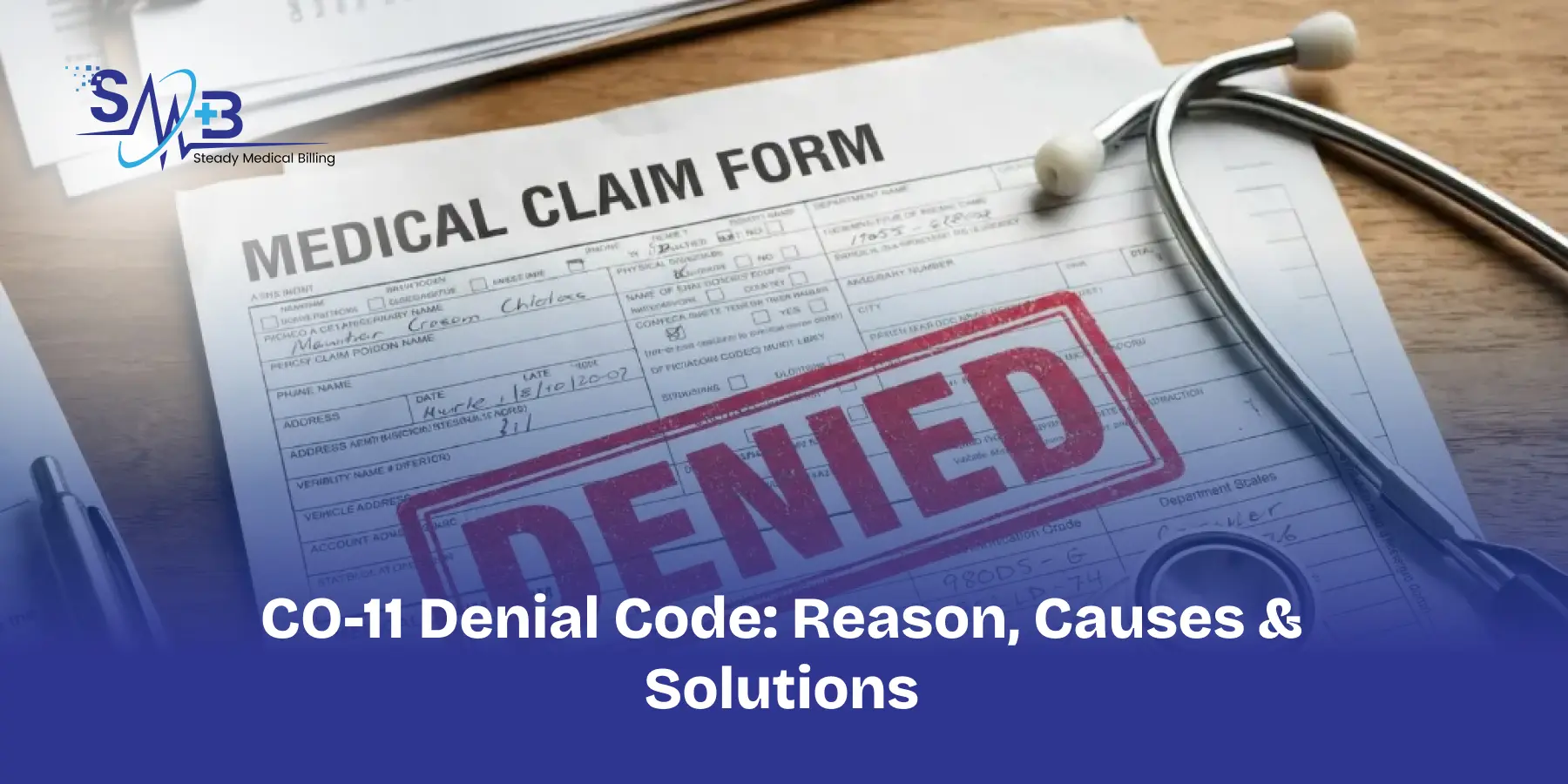
Have you received a CO-11 denial and wondered why the payer rejected a procedure that was actually performed? The problem may be the relationship between the diagnosis code and the procedure code reported on the claim. CARC 11 indicates that the diagnosis is inconsistent with the procedure.
In simple terms, the payer’s claim-processing system determined that the diagnosis submitted does not support or appropriately correspond to the procedure billed. The issue may involve an incorrect diagnosis code, diagnosis sequencing, incomplete documentation, or a procedure that does not align with the documented condition.
The CO group code means Contractual Obligation. CMS explains that group codes identify financial responsibility, with CO assigning responsibility for the adjustment to the provider and PR indicating patient responsibility.
This guide explains the CO-11 denial code, common causes, correction steps, examples, prevention strategies, and key differences from other diagnosis-related denials.
What Does the CO-11 Denial Code Mean?
The CO-11 denial code means: The diagnosis is inconsistent with the procedure.
CARC 11 is a Claim Adjustment Reason Code used to explain why a claim or claim line was adjusted. The issue is generally the relationship between the ICD-10-CM diagnosis code and the CPT or HCPCS procedure code.
For example, a provider may perform a diagnostic test, but the diagnosis reported on the claim may not meet the payer’s requirements for that procedure. The payer may then adjust the claim with CARC 11.
What Does CO Mean in CO-11?
CO stands for Contractual Obligation. CMS identifies CO as a claim adjustment group code that assigns financial responsibility for the unpaid portion to the provider.
Therefore, a CO-11 adjustment should not automatically be treated as a patient balance. The billing team should review the remittance and applicable payer rules before transferring any amount to patient responsibility.
What Is CARC 11?
CARC 11 is the specific adjustment reason for a diagnosis-procedure mismatch. X12 currently defines CARC 11 as “The diagnosis is inconsistent with the procedure.” X12 also directs users to the 835 Healthcare Policy Identification Segment when applicable for additional information.
The CARC gives the general reason, but it may not explain exactly which diagnosis or procedure caused the problem. For that, the billing team may need to review the RARC, payer policy, claim details, and medical documentation.
What Causes a CO-11 Denial? 6 Common Causes of CO-11 Denial
A CO-11 denial occurs when the payer determines that the diagnosis reported on the claim does not align with the procedure billed. Common causes include an incorrect diagnosis code, insufficient documentation, inappropriate diagnosis sequencing, an incorrect procedure code, or payer-specific medical-necessity requirements.
1. Diagnosis Does Not Support the Procedure
The most common issue is a mismatch between the diagnosis reported and the service performed. For example, a provider performs a procedure that requires documentation of a specific condition, but the claim contains a diagnosis that does not establish the medical reason for the service.
The payer may determine that the diagnosis does not support the procedure and adjust the claim with CO-11.
2. Incorrect Diagnosis Code
A diagnosis may have been selected incorrectly during coding. This can happen when:
- The wrong ICD-10-CM code is selected
- A more specific documented diagnosis is available
- The diagnosis does not describe the condition treated
- The diagnosis was entered incorrectly into the billing system
- A diagnosis from a previous encounter was carried forward incorrectly
The coder should compare the submitted diagnosis with the provider’s actual documentation before making a correction.
3. Incorrect Diagnosis Sequencing
Sometimes the diagnosis codes are valid individually, but their order on the claim does not appropriately represent the reason for the service. The primary diagnosis should reflect the condition chiefly responsible for the service when required by the applicable coding rules and payer policy.
If the diagnosis supporting the procedure is reported inappropriately or the claim lacks the relevant diagnosis in the required position, the payer may adjust the claim.
4. Diagnosis Is Too General
A diagnosis may be related to the patient’s condition but still lack the specificity needed to support the procedure under a payer’s requirements. For example, a general symptom code may not provide the same level of support as a documented specific condition when the payer requires a particular diagnosis or medical-necessity criteria.
The coder should use the most specific diagnosis supported by the provider’s documentation, consistent with applicable ICD-10-CM coding guidelines.
5. Procedure Does Not Match the Documented Condition
The problem may not always be the diagnosis code. The procedure itself may have been billed incorrectly. For example, the provider’s documentation may support one service, while the claim contains a different CPT or HCPCS code. The resulting diagnosis-procedure relationship may then appear inconsistent to the payer.
This is why CO-11 review should examine both sides of the claim, not just the diagnosis.
6. Payer-Specific Medical Necessity Requirements
Payers may have specific policies that identify which diagnoses support particular procedures. Medicare and other payers can use coverage policies, medical-necessity criteria, and procedure-specific diagnosis requirements.
Therefore, a diagnosis that appears clinically related to a procedure does not necessarily guarantee payment. The billing team should check the applicable payer policy when the reason for the denial is unclear.
How to Identify the Reason for a CO-11 Denial
CARC 11 identifies the general problem, but it may not explain exactly why the payer considered the diagnosis inconsistent with the procedure.
Review the ERA or EOB
Start by reviewing the complete remittance advice. Check for:
- CARC 11
- Group code CO
- RARC
- Affected claim line
- Diagnosis codes
- Procedure code
- Adjustment amount
- Payer policy or reference information
CMS explains that an ERA reports adjustment information through the Group Code, CARC, and RARC. These codes help providers identify why a claim or claim line was adjusted.
Compare the Diagnosis With the Procedure
Review the diagnosis and procedure together. Ask:
- Does the diagnosis describe the condition being treated?
- Does the diagnosis support the billed procedure?
- Was the correct diagnosis code selected?
- Is a more specific documented diagnosis available?
- Was the diagnosis sequenced appropriately?
- Was the correct CPT or HCPCS code billed?
This comparison helps determine whether the problem is related to diagnosis coding, procedure coding, documentation, or payer policy.
Review the Medical Record
The medical record should support the diagnosis reported on the claim. If the provider documentation supports the diagnosis and procedure but the payer still returns CO-11, the billing team should investigate the payer’s specific coverage or medical-necessity requirements before changing the claim.
How to Correct a CO-11 Denial: Step-by-step process to correct CO-11 denial
Do not automatically change the diagnosis and resubmit the claim. Use a structured correction process.
Step 1: Review the Denial Details
Confirm CARC 11 and review any associated RARC. The additional remark information may provide useful instructions or identify the specific issue requiring review.
Step 2: Identify the Affected Procedure
Determine which CPT or HCPCS code received the adjustment. A claim may contain several procedures, so identify the exact claim line associated with the denial.
Step 3: Review the Diagnosis Codes
Compare the diagnosis codes reported on that claim line with the provider’s documentation. Look for:
- Incorrect diagnosis
- Missing diagnosis
- Diagnosis that is too general
- Incorrect sequencing
- Diagnosis that does not describe the service
Step 4: Verify the Procedure Code
Make sure the billed procedure accurately represents the service documented by the provider. If the procedure itself is incorrect, changing the diagnosis will not solve the underlying problem.
Step 5: Check Payer Requirements
Review the payer’s medical-necessity policy, coverage policy, or diagnosis requirements for the procedure. This step is especially important when the diagnosis appears clinically appropriate, but the payer continues to deny the service.
Step 6: Submit a Corrected Claim or Appeal
If the claim contains a genuine coding error and the documentation supports the correction, submit a corrected claim according to the payer’s requirements. If the original diagnosis and procedure were correctly reported, consider the payer’s reconsideration or appeal process instead of changing valid coding simply to obtain payment.
CO-11 Denial Example
Suppose a provider performs a procedure to evaluate a documented medical condition. The claim is submitted with a diagnosis code that does not adequately support the procedure under the payer’s applicable requirements. The payer returns the claim line with:
| Claim Information | Example |
| Group Code | CO |
| CARC | 11 |
| Issue | Diagnosis is inconsistent with the procedure |
| Review Area | Diagnosis, procedure, documentation, payer policy |
The billing team should:
- Review the ERA/EOB.
- Identify the affected procedure.
- Review the submitted diagnosis.
- Compare the diagnosis with the medical record.
- Verify the CPT/HCPCS code.
- Check the payer’s requirements.
- Correct the claim if a coding error exists.
- Appeal when the original coding is supported.
The key is to determine why the diagnosis and procedure were considered inconsistent before making any change.
How to Prevent CO-11 Denials
Reducing CO-11 denials starts with making sure the diagnosis, procedure, documentation, and payer requirements align before the claim is submitted.
Verify Diagnosis-Procedure Relationships
Before submitting a claim, confirm that the reported ICD-10-CM diagnosis supports the CPT or HCPCS procedure. Pay close attention to services that have specific medical-necessity or coverage requirements.
Use Accurate and Specific Diagnosis Coding
Select the most specific diagnosis supported by the medical record. Do not use a more specific code unless the provider has documented the condition needed to support it. Likewise, avoid relying on a broad or unrelated diagnosis when the documentation supports a more appropriate code.
Review Claim Edits Before Submission
Use claim-scrubbing tools and coding edits to identify potential diagnosis-procedure mismatches before claims reach the payer. Catching these issues during claim review can prevent avoidable denials and reduce rework.
Maintain Payer-Specific Guidelines
Some payers apply specific diagnosis and medical-necessity requirements to certain procedures. Keep these requirements accessible to coding and billing staff, especially when the practice works with multiple insurance plans.
Track CO-11 Denial Trends
Monitor CO-11 denials by:
- Payer
- Procedure
- Diagnosis
- Provider
- Specialty
- Dollar amount
If the same diagnosis-procedure combination repeatedly produces CO-11, investigate the underlying workflow instead of correcting every claim individually.
CO-11 vs. Other Diagnosis-Related Denials
CO-11 is specifically about the diagnosis being inconsistent with the procedure. It is different from other CARCs that address diagnosis-related issues.
| CARC | Main Issue |
| CO-9 | Diagnosis is inconsistent with the patient’s age |
| CO-10 | Diagnosis is inconsistent with the patient’s gender |
| CO-11 | Diagnosis is inconsistent with the procedure |
| CO-12 | Diagnosis is inconsistent with the provider type |
X12’s current CARC list distinguishes these adjustment reasons.
CO-11 Denial Quick Reference
| Item | Details |
| CARC | 11 |
| Common Group Code | CO |
| CO Meaning | Contractual Obligation |
| Main Issue | Diagnosis is inconsistent with the procedure |
| Primary Review | Diagnosis and CPT/HCPCS code |
| Additional Review | Documentation, RARC, payer policy |
| Correction | Correct coding when supported by documentation |
| Appeal | Consider when original coding is correct |
| Prevention | Coding review, claim edits, payer-policy checks |
Conclusion
The CO-11 denial code means that the payer determined the diagnosis reported on the claim was inconsistent with the procedure. CARC 11 specifically identifies this diagnosis-procedure mismatch.
Correcting the denial requires more than changing an ICD-10-CM code. The billing team should review the ERA or EOB, identify the affected procedure, compare the diagnosis with the medical record, verify the procedure code, and check payer requirements.
If the original claim contains a genuine coding error, submit a corrected claim based on the payer’s instructions. If the diagnosis and procedure were correctly reported and supported, the appropriate next step may be reconsideration or appeal.
For RCM teams, recurring CO-11 denials should be tracked by payer, procedure, diagnosis, and provider. Identifying patterns can help address the underlying coding or workflow issue and reduce repeat denials.
FAQs About the CO-11 Denial Code
What does CO-11 mean in medical billing?
CO-11 means the diagnosis is inconsistent with the procedure. CARC 11 identifies the diagnosis-procedure mismatch, while CO indicates Contractual Obligation.
What causes a CO-11 denial?
Common causes include an incorrect diagnosis code, insufficient diagnosis support, incorrect sequencing, an inappropriate procedure code, or payer-specific medical-necessity requirements.
How do you fix a CO-11 denial?
Review the ERA/EOB, diagnosis, procedure, medical record, and payer requirements. If a coding error is confirmed and supported by documentation, submit a corrected claim. If the original coding is correct, follow the payer’s appeal or reconsideration process.
Is CO-11 a diagnosis coding denial?
Yes. CO-11 specifically identifies a problem with the relationship between the diagnosis and the procedure.
Can I change the diagnosis to get a CO-11 claim paid?
No. The diagnosis should accurately reflect the provider’s documentation and the patient’s condition. It should not be changed simply to satisfy a payer denial.
How can providers prevent CO-11 denials?
Providers can reduce CO-11 denials by using accurate diagnosis coding, reviewing diagnosis-procedure relationships, applying claim edits, checking payer requirements, and monitoring recurring denial patterns.