
EHR-Focused Reporting Support
Our team works with available EHR information to organize relevant data and support accurate MIPS reporting requirements.
Stay on top of MIPS requirements with accurate data review, quality measure tracking, and reporting support from Steady Medical Billing. We help medical practices manage the reporting process using relevant EHR, claims, and clinical data while keeping quality reporting aligned with CMS requirements.

Merit-based Incentive Payment System (MIPS) reporting tracks your practice’s performance data and submits required information to the Centers for Medicare & Medicaid Services (CMS). For eligible Medicare Part B providers, accurate reporting can affect future reimbursement through performance-based payment adjustments. Steady Medical Billing manages data review, quality measure tracking, and reporting preparation to support CMS quality reporting compliance. Our team identifies reporting issues and helps keep your practice prepared throughout the performance period.

MIPS reporting involves more than submitting data at the end of the reporting period. Practices need to monitor quality measures, review documentation, and address data gaps while performance information is still being collected. Without regular MIPS quality measures tracking, missing data or reporting issues can remain unnoticed until submission. Steady Medical Billing helps practices stay informed about their reporting status and address potential gaps early.

MIPS eligibility depends on factors such as Medicare Part B billing, Medicare patient volume, covered services, and clinician type. Checking these factors early helps practices understand their reporting responsibilities.
Steady Medical Billing reviews relevant practice information to help determine applicable requirements and support CMS quality reporting compliance. Eligibility may differ for individual clinicians, groups, and other participation types under current CMS rules.
Key Eligibility Factors
MIPS reporting involves several deadlines throughout the performance and submission periods. Missing an important date can leave less time to correct data, complete documentation, or prepare a submission. Steady Medical Billing helps practices monitor these requirements and keep reporting activities organized.
| Key Period | What Practices Need to Do | How Steady Medical Billing Helps |
| July 5, 2026 | Meet the latest start date for a 180-day Promoting Interoperability period. | Review PI reporting requirements and help identify documentation or reporting gaps. |
| October 3, 2026 | Start applicable Improvement Activities with enough time to meet the 90-day requirement. | Help practices review applicable activities and maintain supporting documentation. |
| November 30, 2026 | Complete CMS registration for applicable MIPS Value Pathways (MVPs). | Support reporting preparation and help practices stay aware of applicable registration requirements. |
| December 31, 2026 | Complete the 2026 MIPS performance year. | Review available performance data and identify outstanding reporting gaps before the period closes. |
| January–March 31, 2027 | Submit applicable MIPS data to CMS through the appropriate reporting method. | Prepare and review reporting information for submission and address identified data issues. |
| 2028 | The 2026 performance results affect the applicable Medicare Part B payment adjustment. | Support accurate reporting practices that help reduce avoidable reporting errors. |
Steady Medical Billing provides practical MIPS reporting support, helping practices manage performance data, quality measures, and CMS requirements throughout the reporting period. Our healthcare quality reporting solutions cover data review, measure tracking, reporting preparation, and compliance support, giving practices greater visibility into their MIPS performance.
Monitor applicable quality measures, review performance data, and identify areas that may require attention before reporting deadlines.
Review EHR, claims, and clinical data to identify inconsistencies, missing information, and potential reporting issues before submission.
Track reporting progress throughout the performance period so practices can address gaps before they affect final results.
Organize required performance information and prepare reporting data according to applicable CMS requirements and submission guidelines.
Help practices maintain accurate documentation and reporting processes that support ongoing compliance with MIPS requirements.
Identify data gaps, measure concerns, and reporting problems early so practices have time to make appropriate corrections.
Effective MIPS reporting starts with understanding your reporting requirements and continues through data collection, quality measure review, performance monitoring, and submission preparation. Steady Medical Billing manages these steps with attention to reporting accuracy. Our team reviews available EHR, claims, and clinical information, monitors relevant measures, and identifies potential gaps throughout the reporting period. This structured process helps practices keep their reporting information organized and ready for submission.
We review applicable reporting requirements and identify the measures and information relevant to your practice.
We gather available EHR, claims, and clinical data needed to support accurate MIPS reporting.
Our team reviews reported measures and checks available data for missing or inconsistent information.

Performance information is monitored throughout the reporting period to identify potential gaps before deadlines.
We review reporting information for accuracy and address identified data issues before submission preparation.
Information is organized and prepared according to applicable CMS reporting requirements and guidelines.
MIPS reporting can affect Medicare reimbursement, making accurate performance tracking important for eligible clinicians. Here are a few key figures from the 2026 MIPS program.
Performance Categories
Quality, Cost, Improvement Activities, and Promoting Interoperability.
Quality Weight
Quality contributes 30% of the 2026 MIPS final score.
Cost Weight
Cost contributes another 30% of the final score.
Promoting Interoperability
This category accounts for 25% of the final score.
Improvement Activities
Improvement Activities account for 15%.
Cost Measures
CMS lists 35 cost measures for the 2026 performance period.
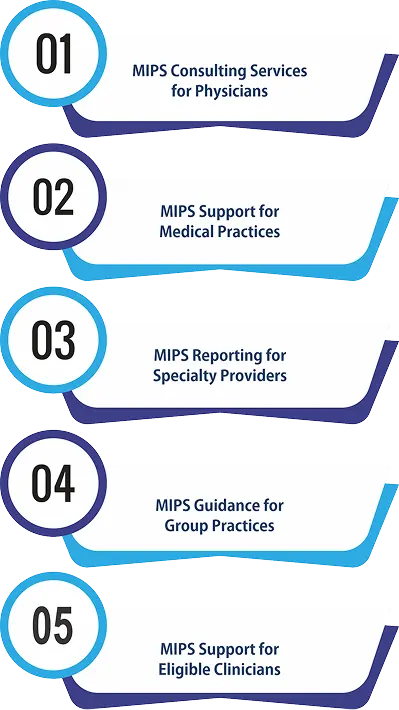
MIPS requirements can differ by provider type, specialty, reporting needs, and practice structure. Steady Medical Billing provides reporting guidance to help healthcare providers understand applicable requirements and performance goals. From individual clinicians to larger groups, our team can review reporting needs, available data, and potential gaps. This provider-focused approach helps practices maintain accurate reporting while addressing MIPS requirements throughout the performance period.
MIPS Consulting Services for Physicians
MIPS Support for Medical Practices
MIPS Reporting for Specialty Providers
MIPS Guidance for Group Practices
MIPS Support for Eligible Clinicians
Accurate MIPS reporting starts with clean and complete data. Steady Medical Billing reviews EHR, claims, and clinical information to find missing details, errors, and reporting concerns. Our healthcare data review and audit services help practices check their reporting information before submission. We identify data gaps early so your team has time to review and correct them.
Review EHR and clinical data
Check claims for missing information
Find reporting data errors
Review supporting practice documentation
Identify gaps before submission
Check data for accuracy
Complete patient data plays an important role in quality reporting. Steady Medical Billing reviews available EHR and clinical information to identify missing follow-ups, incomplete documentation, and other gaps that may affect applicable MIPS measures.
Areas We Review
Steady Medical Billing provides MIPS reporting risk management support to help practices address reporting requirements, identify potential payment risks, and prepare required information before submission deadlines. Our team handles key reporting tasks so your practice has professional support throughout the MIPS cycle.
Assess applicable MIPS requirements for your practice.
Identify reporting areas that may affect your results.
Organize information needed to support reported performance.
Flag issues early so your team has time to address them.
Prepare reporting information for the applicable submission process.

MIPS reporting requirements can vary based on a provider’s specialty, clinical services, and applicable quality measures. Steady Medical Billing provides MIPS reporting support for specialty providers by reviewing specialty-specific requirements and helping practices prepare the information needed for accurate reporting.

Our team works with available EHR information to organize relevant data and support accurate MIPS reporting requirements.
Our medical billing background helps connect reporting requirements with claims, clinical information, and the financial side of practice operations.
We monitor reporting activities throughout the cycle, helping practices address requirements before deadlines rather than handling everything at submission time.
Steady Medical Billing provides direct reporting assistance for individual clinicians and groups, with support based on applicable practice requirements.
Schedule a Consultation
Let Steady Medical Billing handle the reporting workload while your practice stays focused on patient care. Get professional support for MIPS requirements, data preparation, and CMS reporting.

What are MIPS quality reporting requirements for medical practices?
Can practices outsource their MIPS reporting?
What do MIPS consulting services for physicians cover?
Why is ongoing MIPS reporting support important?
How does Steady Medical Billing help with MIPS reporting?