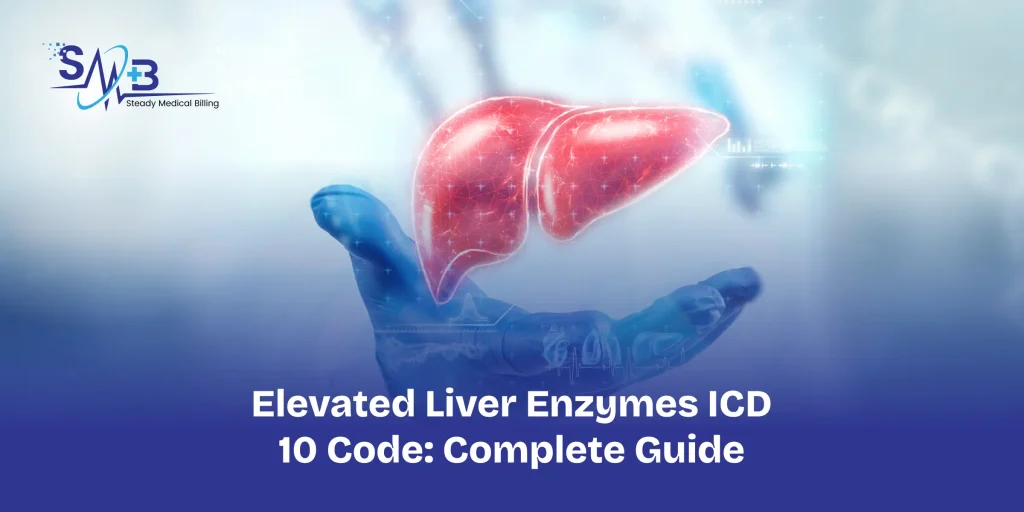
The ICD-10-CM code for elevated liver enzymes is R74.01, Elevation of levels of liver transaminase levels, when the provider documents raised ALT or AST without a diagnosis that explains them.
The parent code R74.0 is a header and cannot be billed. It was split into R74.01 (liver transaminases) and R74.02 (lactic acid dehydrogenase, LDH). Other raised enzymes, such as alkaline phosphatase or GGT, go to R74.8, and an abnormal liver panel described only in general terms goes to R94.5.
Once the provider explains the abnormal result with a diagnosis, such as fatty liver, hepatitis C or a drug reaction, code that diagnosis. The lab finding code usually comes off the claim at that point, because it is part of the condition. This guide shows how to match the code to the enzyme, how to move from a lab finding to a diagnosis, and how to code medication-related elevations correctly. For lab test procedure codes, see our lab CPT codes guide.
Key Takeaways
- R74.01 covers elevated ALT and AST, alone or together. One code covers both.
- R74.0 is not billable. Use R74.01 or R74.02.
- Alkaline phosphatase, GGT and other enzymes are coded R74.8; R74.9 is for an unspecified abnormal enzyme.
- Code an abnormal lab only when the provider documents it as clinically significant. A lab value alone, without the provider’s interpretation, is not coded.
- When a diagnosis explains the elevation, code the diagnosis instead of R74.01.
Match the Code to the Abnormal Test
| What the provider documents | ICD-10-CM code | Official title |
|---|---|---|
| Elevated ALT, AST or transaminases | R74.01 | Elevation of levels of liver transaminase levels |
| Elevated LDH | R74.02 | Elevation of levels of lactic acid dehydrogenase [LDH] |
| Elevated alkaline phosphatase, GGT or another serum enzyme | R74.8 | Abnormal levels of other serum enzymes |
| Abnormal enzyme, type not stated | R74.9 | Abnormal serum enzyme level, unspecified |
| Abnormal liver function tests or liver panel, no enzyme named | R94.5 | Abnormal results of liver function studies |
| Raised bilirubin with yellowing of skin or eyes | R17 | Unspecified jaundice |
LFT versus transaminases. If the note says only "abnormal LFTs," R94.5 fits the words used. If it names ALT or AST, use R74.01, which is more specific.
From Lab Finding to Diagnosis
An elevated enzyme is a finding, not a disease. The code changes as the work-up answers the question of why.
- First visit, cause unknown. The provider notes elevated transaminases and orders a hepatitis panel and ultrasound. Code R74.01.
- Work-up in progress. In outpatient settings, a possible or suspected cause is not coded. R74.01 stays until a diagnosis is confirmed.
- Cause confirmed. The ultrasound shows steatosis and the provider diagnoses fatty liver. Code K76.0 and drop R74.01.
- Monitoring visits. Follow-up for the diagnosed condition is coded with the condition. Add R74.01 only if the provider documents an elevation that the diagnosis does not explain.
Common Causes and Their Codes
| Confirmed cause | ICD-10-CM code | Coding note |
|---|---|---|
| Fatty liver, NAFLD or MASLD | K76.0 | See our fatty liver ICD-10 guide for NASH and fibrosis codes |
| Alcoholic fatty liver | K70.0 | Add the F10.- code for documented alcohol use |
| Chronic hepatitis C | B18.2 | Use the acute codes only when acute infection is documented |
| Chronic hepatitis B | B18.1 | B18.0 when delta agent is also documented |
| Drug-induced liver injury with hepatitis | K71.6 plus the adverse-effect T code | See the medication section below |
| Gilbert syndrome (raised bilirubin) | E80.4 | Inherited, usually benign; not a transaminase problem |
Medication-Related Elevations
Statins, acetaminophen, antibiotics, antifungals and many other drugs can raise liver enzymes. How you code it depends on what the provider says happened.
| Documentation | Codes, in order |
|---|---|
| Transaminase rise from a statin taken as prescribed, no liver disease diagnosed | R74.01, then T46.6X5A (adverse effect of antihyperlipidemic drugs) |
| Drug-induced hepatitis from a correctly taken medication | K71.6, then the T code for the drug with 5 in the sixth character |
| Liver injury after an overdose or wrong use of acetaminophen | The poisoning code first, such as T39.1X1A for accidental poisoning, then the liver manifestation |
Do not use T88.7 when the drug is known. T88.7 is for an unspecified adverse effect of a drug. When the provider names the drug, use the matching T36 to T50 adverse-effect code.
Elevated Enzymes Found at a Checkup
When a routine exam finds a clinically significant abnormal result, the encounter code changes too. Code Z00.01, Encounter for general adult medical examination with abnormal findings, first, then R74.01. Z00.00 is only for an exam with no abnormal findings.
For pre-employment and insurance exams, Z02.1 and Z02.6 are followed by the finding code in the same way.
What the Note Should Include
- Which enzymes were raised, with values and the lab’s reference range
- The provider’s interpretation, such as mild elevation or clinically significant
- Relevant history: alcohol use, medications and supplements, prior results
- Tests ordered to find the cause, such as a hepatitis panel or ultrasound
- The diagnosis, once the cause is established, in the provider’s words
Repeat liver panels are reviewed for medical necessity, so the diagnosis linked to each test should explain why it was repeated. A mismatch between the test and the diagnosis can return as a CO-11 denial.
Liver panels and follow-up imaging getting denied? Steady Medical Billing’s coders link each lab and imaging order to the diagnosis that supports it, and update the codes as the work-up confirms a cause.
Frequently Asked Questions
What is the ICD-10 code for elevated liver enzymes?
R74.01, Elevation of levels of liver transaminase levels, covers elevated ALT and AST. Other raised enzymes such as alkaline phosphatase are coded R74.8.
Is R74.0 still a valid code?
No. R74.0 is now a non-billable header. Report R74.01 for transaminases or R74.02 for LDH.
Do I code ALT and AST separately?
No. R74.01 covers elevated transaminase levels, so one code is reported whether ALT, AST or both are raised.
Should R74.01 be coded with fatty liver?
Usually not. Once the provider diagnoses fatty liver, code K76.0. Add R74.01 only if the provider documents an elevation the diagnosis does not explain.
How do I code elevated liver enzymes from a statin?
If the statin was taken as prescribed and no liver disease is diagnosed, code R74.01 followed by T46.6X5A for the adverse effect of antihyperlipidemic drugs.